

Lipedema
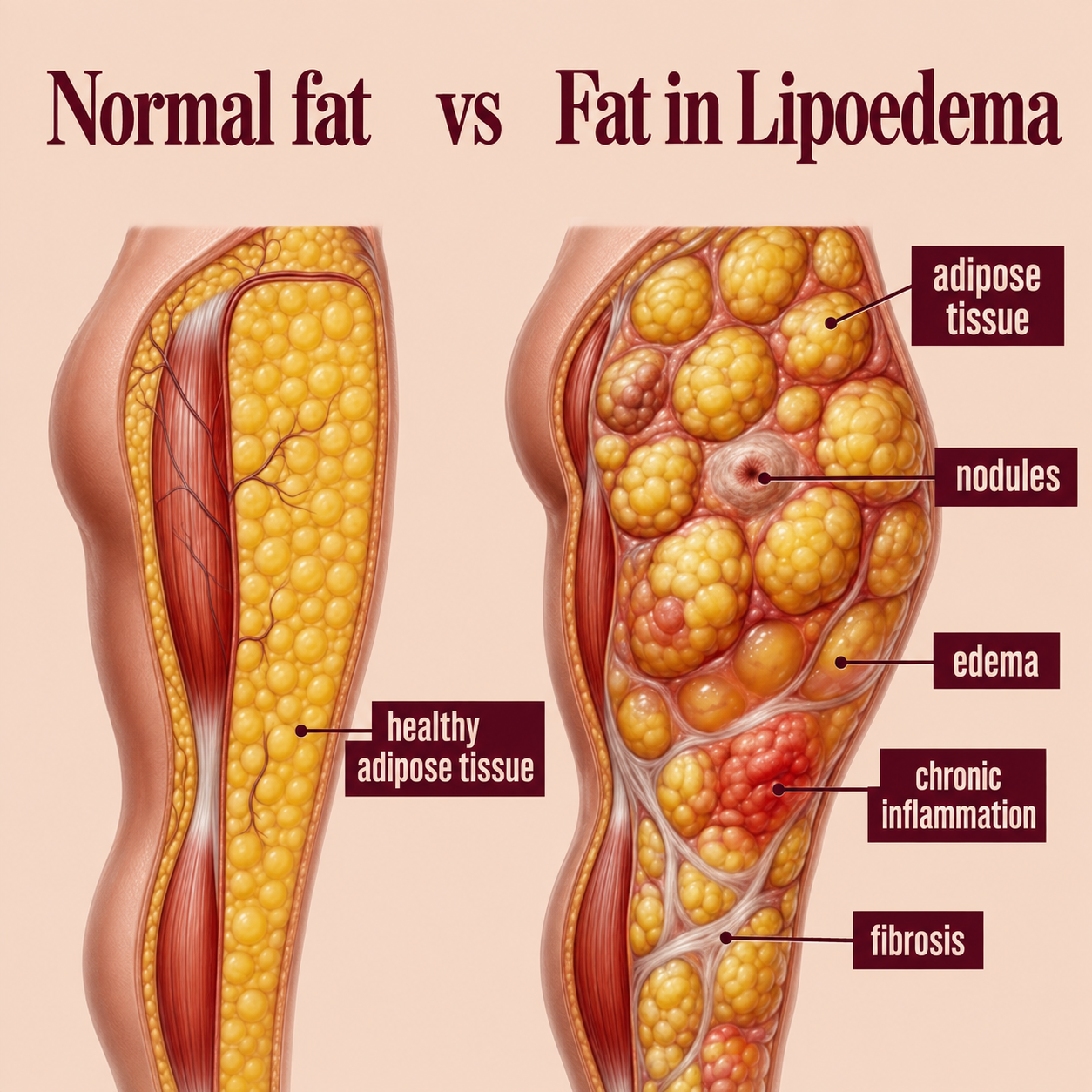
Lipedema is a chronic, lifelong connective tissue and fat-distribution disorder that primarily affects women and most commonly causes a disproportionate buildup of painful or tender fatty tissue in the legs, hips, and sometimes the arms.
Despite being a recognized condition, lipedema can be difficult to diagnose because it remains underrecognized in general medical practice and there are relatively few healthcare providers who specialize specifically in lipedema and lymphatic disorders. Many people spend years being told that their symptoms are simply related to weight gain, cellulite, or obesity before receiving an appropriate diagnosis.
Lipedema can progress over time, although the rate and degree of progression vary greatly and not everyone will experience significant worsening.
Because there is currently no cure, long-term management is focused on reducing symptoms, maintaining mobility, and supporting overall tissue and lymphatic health. Compression garments, regular movement and exercise, balanced nutrition, weight management when appropriate, skin care, and lymphatic therapies may all play an important role in managing symptoms. While weight loss does not specifically eliminate lipedema tissue, maintaining a healthy weight can reduce additional strain on the lymphatic and vascular systems.
In more advanced cases, chronic inflammation and increased demands on the lymphatic system can contribute to secondary lymphedema, sometimes referred to as lipo-lymphedema. Early recognition, education, and consistent management can help people with lipedema remain active, manage discomfort and swelling, and protect their long-term function and quality of life.
Rowen has extensive working with lipedema patients. If you are looking for consultation in the long term management of the disease, please contact Rowen or an in-person visit or zoom meeting.
Lipedema Basics
-
Lipedema often coincides with obesity but they are two different things. Lipedema is a chronic disease of subcutaneous adipose tissue and connective tissue.
The tissue is nonresponse to diet and exercise, unlike regular adipose tissue.
The main difference in lipedema tissue and regular adipose tissue is the connective tissue around lipedema tissue can thicken and become fibrotic with increased collagen deposition. This is why the tissue can form into firm, nodular, pebbly texture.
-
Lipedema is distinctively different than lymphedema, however, untreated progressed lipedema can cause one to develop lymphedema due to the strain that the lipedema tissue puts on the lymph system. this condition is called lipelymphedema.
Other common co-existing condition include chronic venous disease, obesity, joint hyper mobility such as Ehlers-Danlos Syndrome (EDS), and Mast Cell Activation Syndrome (MCAS).
-
There has been rare cases of assigned males at birth (AMAB) but 99% of lipedema diagnosis are AFABs/
-
It appears that lipedema runs in families in most patients.
-
Progression varies considerably from person to person.
Lipedema Symptoms
-
The feeling that your legs are heavy and achy which affects your ability to participate in activities could indicate lipedema. Legs might feel heavy before lipedema tissue is able to be palpated or be noticeable.
-
Lipedema tissue typically deposits in a symmetrical manner. If one extremity is much larger than the other, this points to lymphedema rather than lipedema.
-
This occurs because the connective tissue is thickening and forming fibrosis surrounding the adipose tissue. The lack of this texture does not mean lipedema tissue is not there.
-
The presence of swelling with lipedema does not necessarily mean you have developed lipo-lymphedema. Because the lymphatic system under so much strain in areas where lipedema is present, it is very common that these areas will be edematous. Wearing compression throughout the day will greatly support your lymphatic system to reduce swelling and reduce the progression of the disease.
-
Often described as feeling sore, bruised, heavy, burning, throbbing, hypersensitive to touch, even when there are no visible injuries.
This discomfort is thought to be related to the changes within lipedema tissue. Enlarged fat cells can increase pressure within the tissue, while inflammation, connective-tissue fibrosis, altered microcirculation, and increased interstitial fluid may place additional stress on small blood vessels and sensory nerves.
-
Folks with lipedema have increased fragility and permeability of the small blood vessels. When these vessels are disrupted, even with very mild trauma, it can allow blood to leak into surrounding tissue creating a bruise.